
Ponds support all kinds of wildlife. They’re biodiversity hotspots providing a home for freshwater invertebrates, breeding pools for amphibians, and water for birds and mammals.
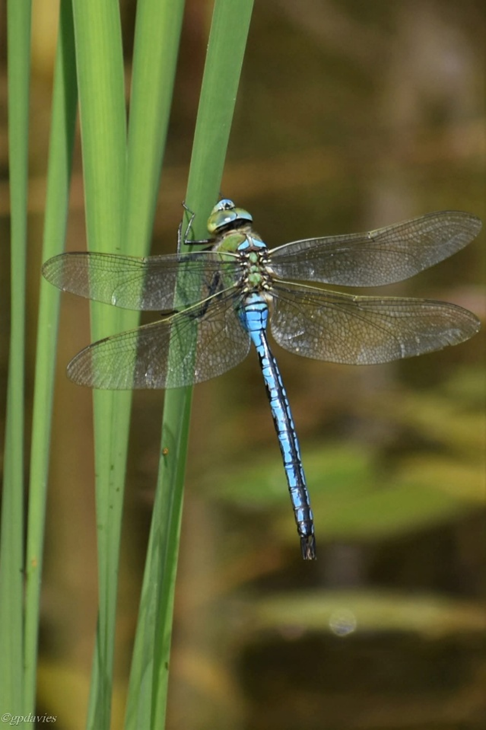
An insect we often see patrolling the ponds are dragonflies. Dragonflies are one of the earliest winged insects found in the fossil record, having evolved around 300 million years ago. Modern dragonflies are much smaller than their giant predecessors, but they’re equally ferocious predators.
Dragonflies begin life as nymphs in freshwater ponds, lakes or slow-moving streams. In fact, they spend most of their life in this larval stage feeding on anything smaller than themselves, including small newts! Most British dragonfly species stay in the pond for 1 – 2 years before emerging as adults.
Adult dragonflies are incredibly quick and nimble, they can control the speed and angle of each of their wings meaning they can fly in any direction. Dragonflies eat a lot of species we often view as pests such as midges and mosquitoes. Larger dragonflies can also catch butterflies and damselflies!
The distribution of many dragonfly species is moving northwards across the UK as temperatures rise due to climate change. However, rising temperatures are generally bad news for upland and northern species whose boggy wetland habitats are increasingly drying up due to episodes of drought. Use of pesticides and water pollution can also reduce the invertebrate prey upon which dragonflies feed. Habitat improvement such as pond creation and restoration of upland wetlands can give these amazing aerial hunters a real boost.
You can spot many species of dragonfly on our nature reserves, from broad-bodied chasers that emerge in early May, to common darters which can be seen in flight all the way through to October. A favourite amongst our volunteers is the emperor dragonfly, Britains largest dragonfly – easy to spot but a challenge to photograph!
Photos by Graham Davis – Male emperor dragonfly